
High Potency & Containment Systems
Design containment around the compound, the task and the evidence needed to control exposure.
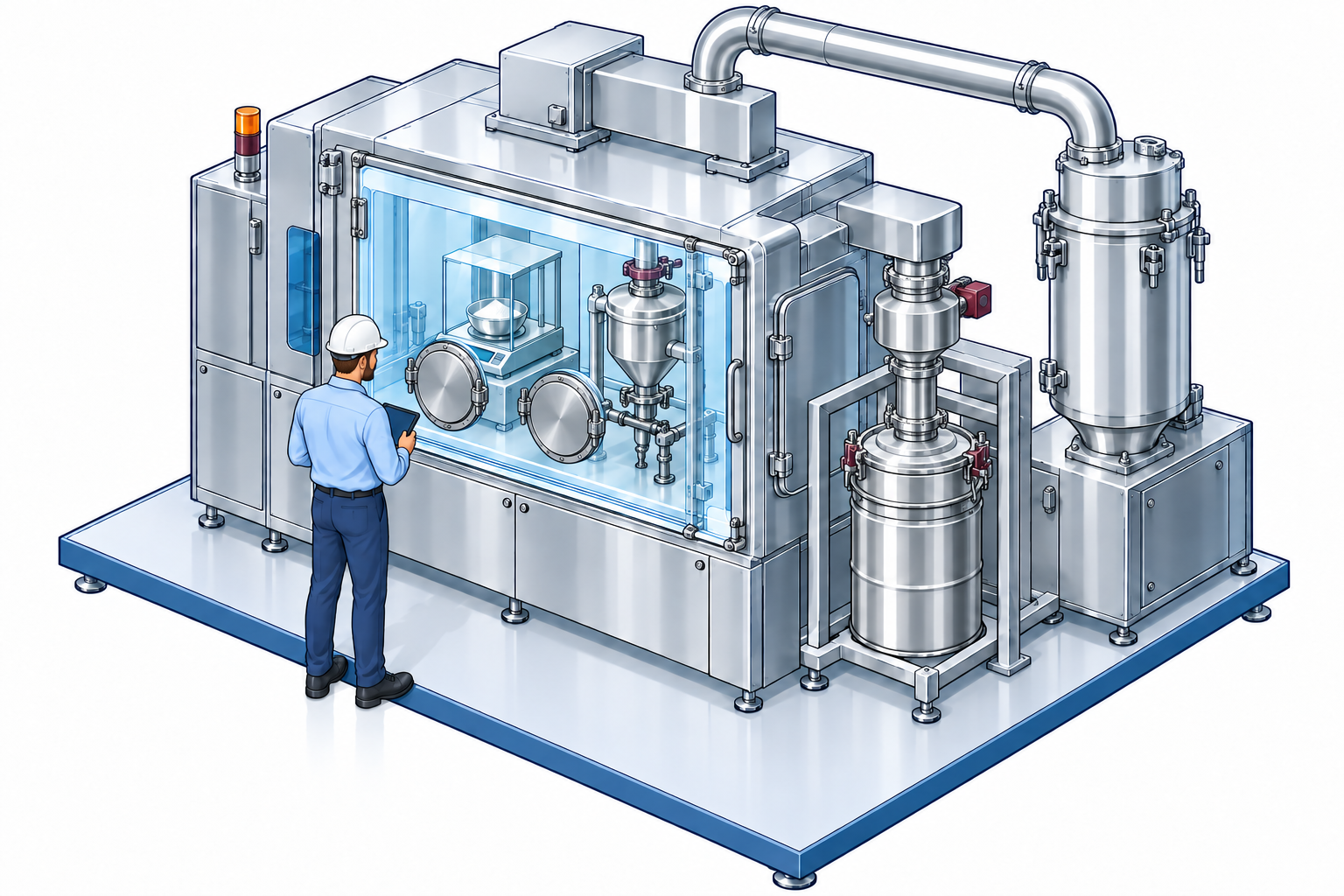
Connect OEL and OEB assessments with isolators, contained transfer, extraction, cleaning and safe maintenance. Distinguish occupational protection, product cross-contamination and aseptic requirements.
What containment decision are you working on?
12 articles across 6 decision areas. Start with the task you need to resolve.
What must the containment system achieve?
Translate compound hazards, OELs, process tasks and exposure pathways into testable requirements. Define primary and secondary controls and their evidence.
Translate compound hazards, OELs, process tasks and exposure pathways into testable requirements. Define primary and secondary controls and their evidence.
Which equipment fits the actual work?
Compare isolators, gloveboxes, downflow booths and closed equipment. Assess boundary integrity, ergonomics, transfer interfaces and lifecycle access.
Compare isolators, gloveboxes, downflow booths and closed equipment. Assess boundary integrity, ergonomics, transfer interfaces and lifecycle access.
Where can material escape during transfer?
Review docking, disconnection, liners and displaced air. Coordinate primary containment with room pressure, extraction, filtration and failure responses.
Review docking, disconnection, liners and displaced air. Coordinate primary containment with room pressure, extraction, filtration and failure responses.
How will the system become safe to clean and service?
Distinguish residue removal, inactivation and microbiological treatment. Plan waste handling, filter changes, glove replacement and controlled opening.
Distinguish residue removal, inactivation and microbiological treatment. Plan waste handling, filter changes, glove replacement and controlled opening.
Which evidence supports the performance claim?
Link DQ, FAT, SAT, IQ, OQ and PQ to critical requirements. Separate integrity tests, surrogate emission studies and actual occupational exposure assessment.
Link DQ, FAT, SAT, IQ, OQ and PQ to critical requirements. Separate integrity tests, surrogate emission studies and actual occupational exposure assessment.
How will performance remain reliable over time?
Investigate failures, verify corrections and control changes. Compare suppliers on relevant evidence, service capability and total lifecycle cost.
Investigate failures, verify corrections and control changes. Compare suppliers on relevant evidence, service capability and total lifecycle cost.
A containment project or an exposure-control problem to resolve?
Describe the material, process step, available hazard information and project stage: URS, equipment selection, transfer, HVAC, cleaning, maintenance, qualification, performance testing or supplier selection.
Describe your projectWe help you identify the expertise required.
GuideGxP reviews your request and, where appropriate, helps identify a professional or company suited to the technical need and project context.
- 01Describe the process, containment system and decision to be made.
- 02We assess the required expertise and geographic context.
- 03We suggest an appropriate professional contact when available.
