
Lyophilization & Freeze-Drying Systems
Connect product characteristics to a robust freeze-drying process and equipment that can deliver it.
Translate critical temperatures, heat and mass transfer, vial configuration and scale into cycle development, lyophilizer design, monitoring and qualification decisions. Address aseptic interfaces and lifecycle evidence.
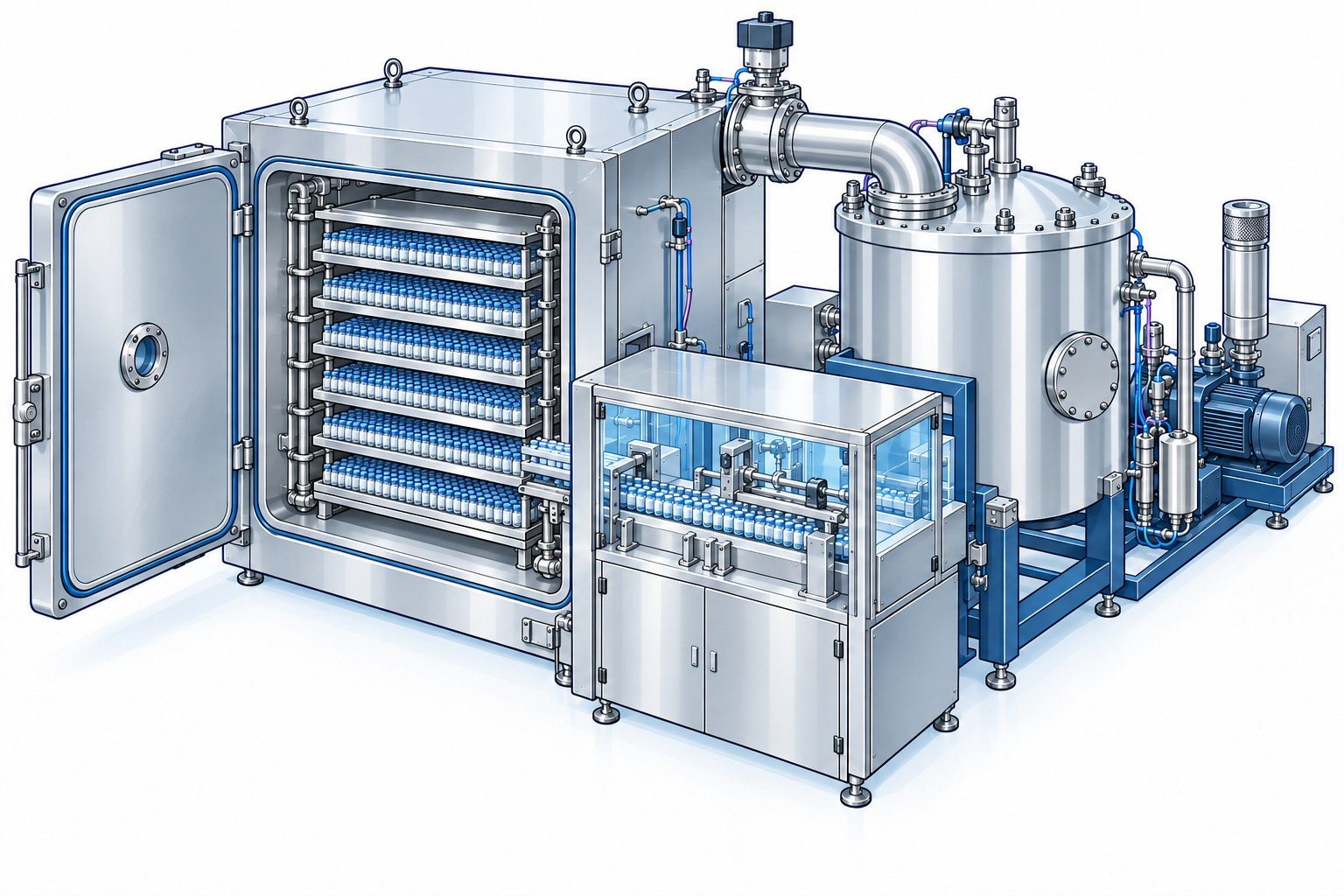
Which lyophilization decision are you working on?
12 articles across 6 decision areas. Start with the task you need to resolve.
What must the process and equipment achieve?
Connect product quality, stability, container and scale to testable requirements. Define the development strategy, equipment boundaries and evidence needed before committing to a design.
Connect product quality, stability, container and scale to testable requirements. Define the development strategy, equipment boundaries and evidence needed before committing to a design.
Which equipment and interfaces fit the intended process?
Assess the chamber, shelves, condenser, refrigeration and vacuum as an integrated system. Review loading, unloading, stoppering and aseptic interfaces.
Assess the chamber, shelves, condenser, refrigeration and vacuum as an integrated system. Review loading, unloading, stoppering and aseptic interfaces.
How will the cycle protect quality throughout drying?
Distinguish freezing, sublimation and desorption. Use product characterisation and heat and mass transfer to develop a robust cycle within equipment capability.
Distinguish freezing, sublimation and desorption. Use product characterisation and heat and mass transfer to develop a robust cycle within equipment capability.
What do the measurements establish about the batch?
Combine temperature, pressure and endpoint evidence with their limitations. Control recipes, phase transitions, alarms, recovery and complete electronic records.
Combine temperature, pressure and endpoint evidence with their limitations. Control recipes, phase transitions, alarms, recovery and complete electronic records.
Which evidence supports qualification and transfer?
Link equipment verification to intended use and distinguish it from product process validation. Compare heat transfer, loading and capacity when moving between scales.
Link equipment verification to intended use and distinguish it from product process validation. Compare heat transfer, loading and capacity when moving between scales.
How will capability remain reliable over the lifecycle?
Investigate cake defects and cycle deviations using evidence. Compare suppliers, service, refrigeration strategy, obsolescence and total cost of ownership.
Investigate cake defects and cycle deviations using evidence. Compare suppliers, service, refrigeration strategy, obsolescence and total cost of ownership.
A lyophilization project, cycle transfer or manufacturing problem to resolve?
Describe the product and container, available development data, equipment and project stage: URS, design, cycle development, monitoring, automation, qualification, scale-up, transfer or troubleshooting.
Describe your projectWe help you identify the expertise required.
GuideGxP reviews your request and, where appropriate, helps identify a professional or company suited to the technical need and project context.
- 01Describe the product, freeze-drying system and technical decision to be made.
- 02We assess the required expertise and geographic context.
- 03We suggest an appropriate professional contact when available.
